Anker 10,000 mAh power banks compared
A built-in cable, a retractable cable, or a magnetic charging pad: choosing between Anker A1259, A1638 and A1654.
The models compared
Scroll sideways to compare.
| Compare | 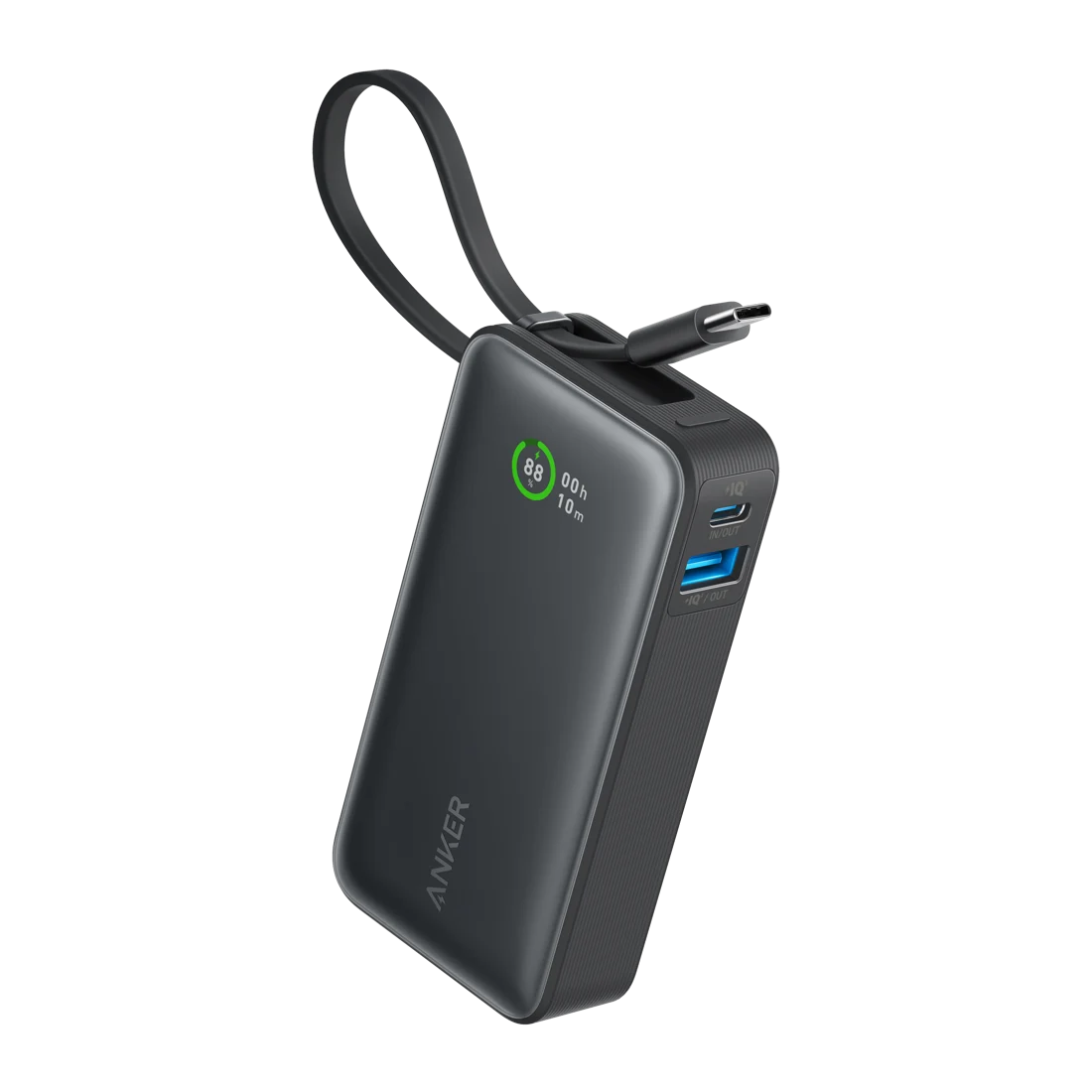 Anker Nano Power Bank A1259 | 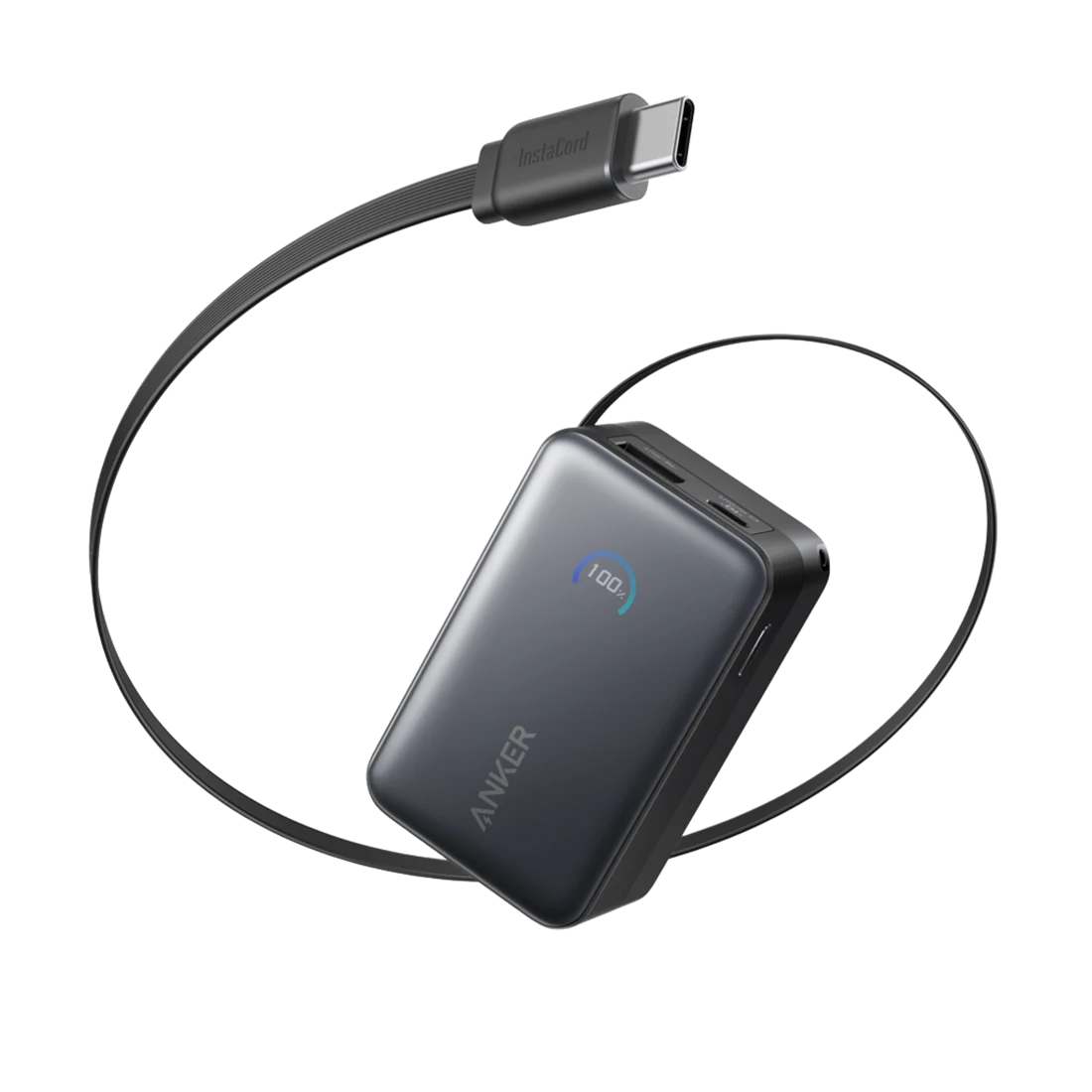 Anker Nano Power Bank A1638 | 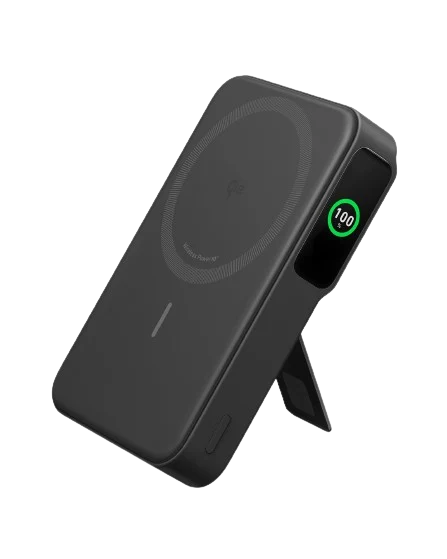 Anker MagGo Power Bank A1654 |
|---|---|---|---|
| Connection to your phone | Built-in USB-C cable | 2.3ft retractable USB-C cable | Qi2 pad or separate USB-C cable |
| Single-output limit | 30W USB-C | 45W USB-C | 15W wireless / 27W wired |
| What changes the choice | 215g; spare USB-C and USB-A ports | Longer reach; 0.51lb | 250g; folding stand |
Make a small packing test
Put the phone where you would use it and the bank where it would sit. If they stay together, a short attached cable may remove a loose item. If the phone needs to reach a table while the battery stays in a bag, the A1638’s 2.3 ft retractable lead addresses a different problem. If the phone should stand upright, consider the A1654’s magnetic pad and stand.
Then list the devices that would charge at once. The shared-output limits are lower than the single-device headlines, especially on the A1638 and A1654. Buying for the actual combination is more useful than choosing solely from a 10,000mAh label shared by all three.
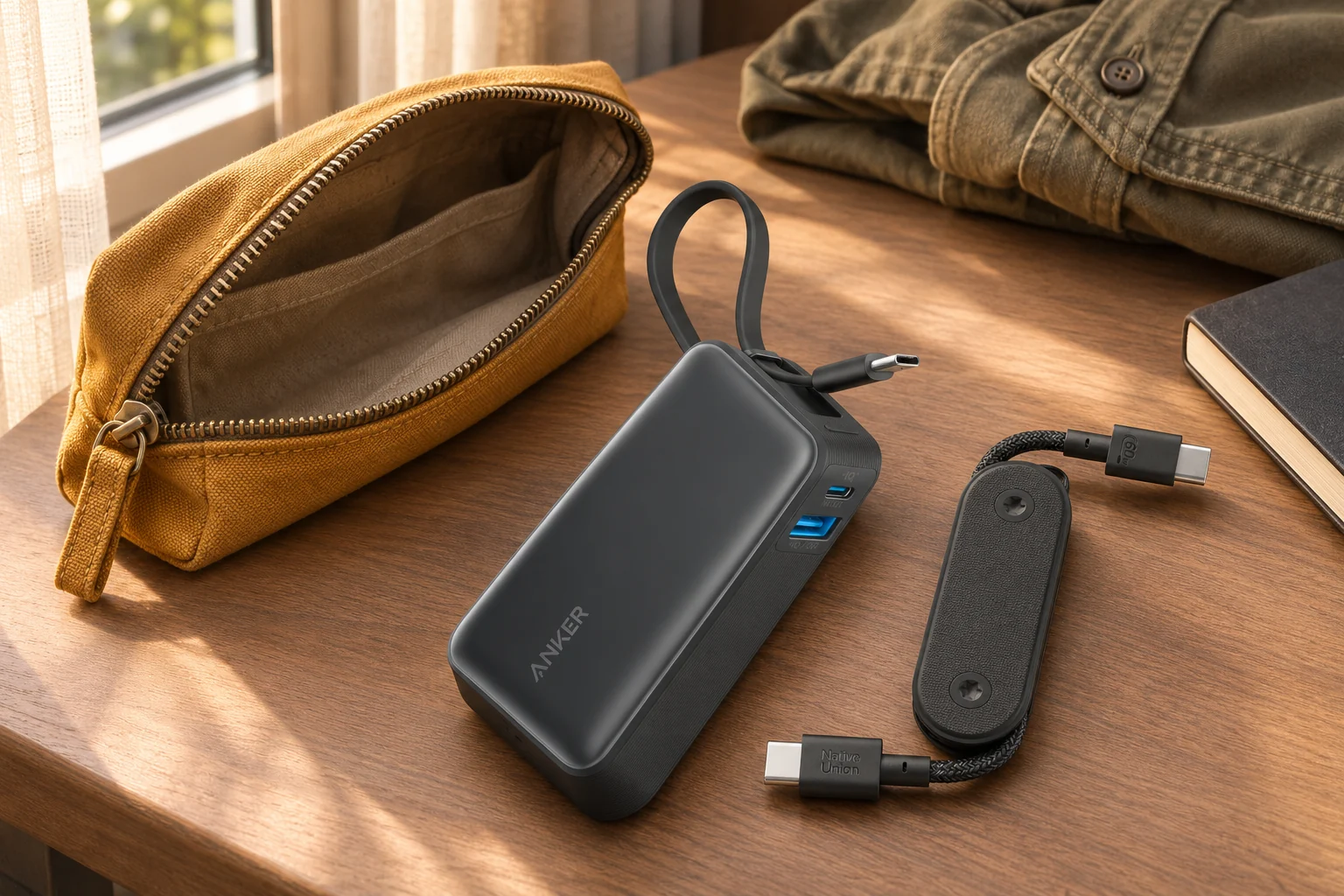
Start with the cable you would otherwise pack
All three banks are marked 10,000mAh, but handle cables differently. The A1259 keeps a short USB-C lead attached to the battery. The A1638 stores a longer, retractable lead inside it. The MagGo A1654 puts a magnetic charging surface on the bank and leaves the wired connection to a separate cable.
For a phone that usually sits beside the battery in a bag, the A1259 is the straightforward starting point. Its attached lead removes one loose item from the packing list. The A1638 makes more sense when the phone needs to sit farther away: its cable extends to 2.3ft. Check the route between the two devices before paying for reach you will not use.
Magnetic charging solves a different problem
The A1654 can hold a compatible phone upright on its folding stand while charging wirelessly. That is useful on a table, where a phone may also be displaying a call or a recipe. It weighs 250g, versus 215g for the A1259, before adding any separate charging cable.
Check the exact phone and case against Anker’s compatibility information. A magnetic ring on a case does not establish the phone’s wireless charging capabilities. The USB-C port provides a separate wired option at up to 27W; the wireless pad is rated up to 15W. The phone also needs to support the corresponding charging mode.
One phone and two devices are different purchases
The A1638 has the highest single USB-C rating here, at 45W, but connecting its cable and USB-C port together reduces their specified limits to 15W and 7.5W. The A1259 lists 24W combined output. On the A1654, Anker says wireless output falls to 5W when the USB-C port is charging another device.
If the real job is to refill two devices at the same time, choose from those shared figures. If it is one phone at a time, cable handling and the phone’s supported charging protocol are more useful distinctions. Capacity labels also cannot promise a fixed number of full phone charges: the phone battery, conversion losses and use during charging all affect the result.
Sources
- Anker Nano Power Bank A1259: manufacturer specificationsChecked November 15, 2026
- Anker Nano Power Bank A1638: manufacturer specificationsChecked November 15, 2026
- Anker MagGo Power Bank A1654: manufacturer specificationsChecked November 15, 2026