JBL Go 4 vs. Clip 5 Bluetooth speakers
A compact speaker comparison built around attachment, packed size and the battery mode you will use.
The models compared
Scroll sideways to compare.
| Compare | 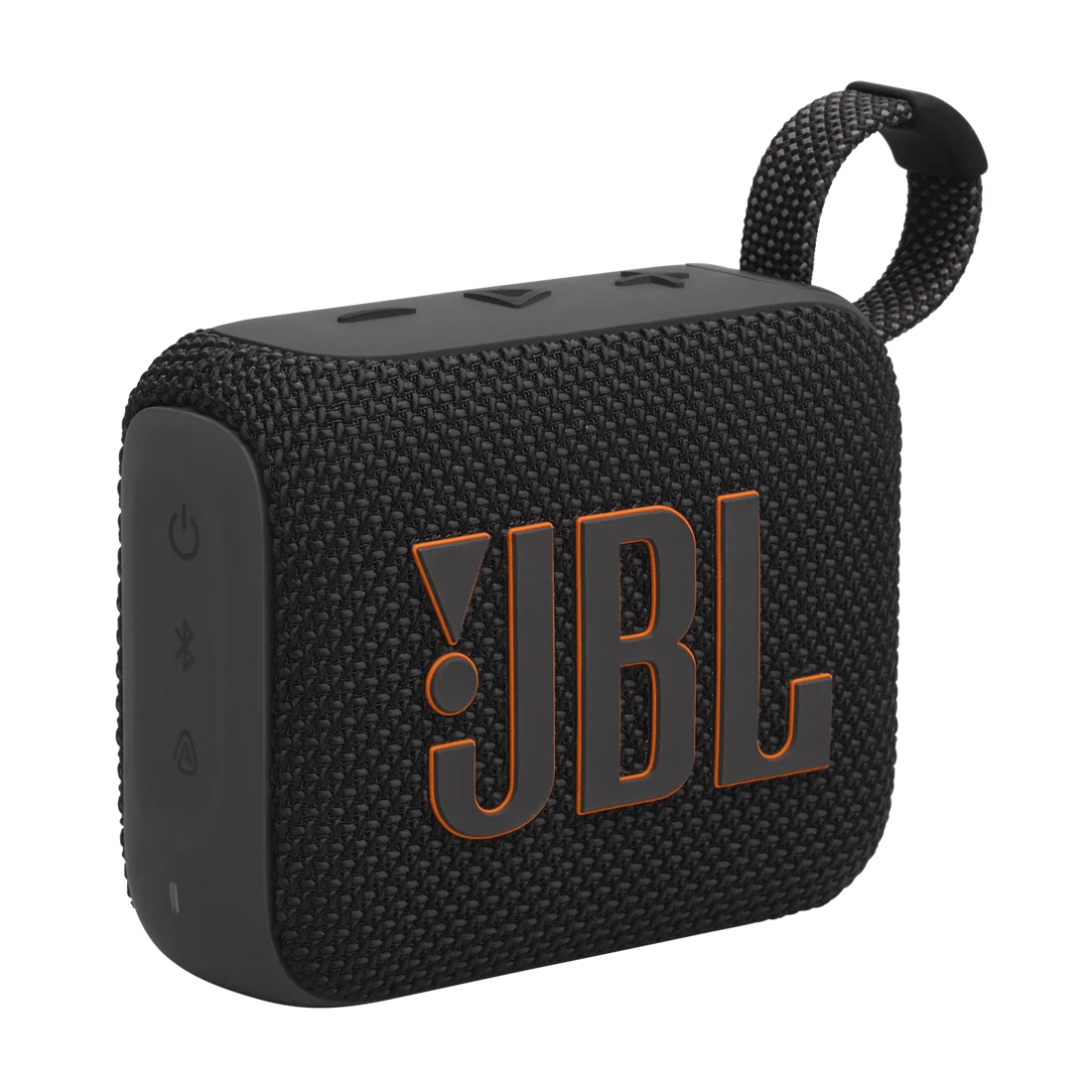 JBL Go 4 | 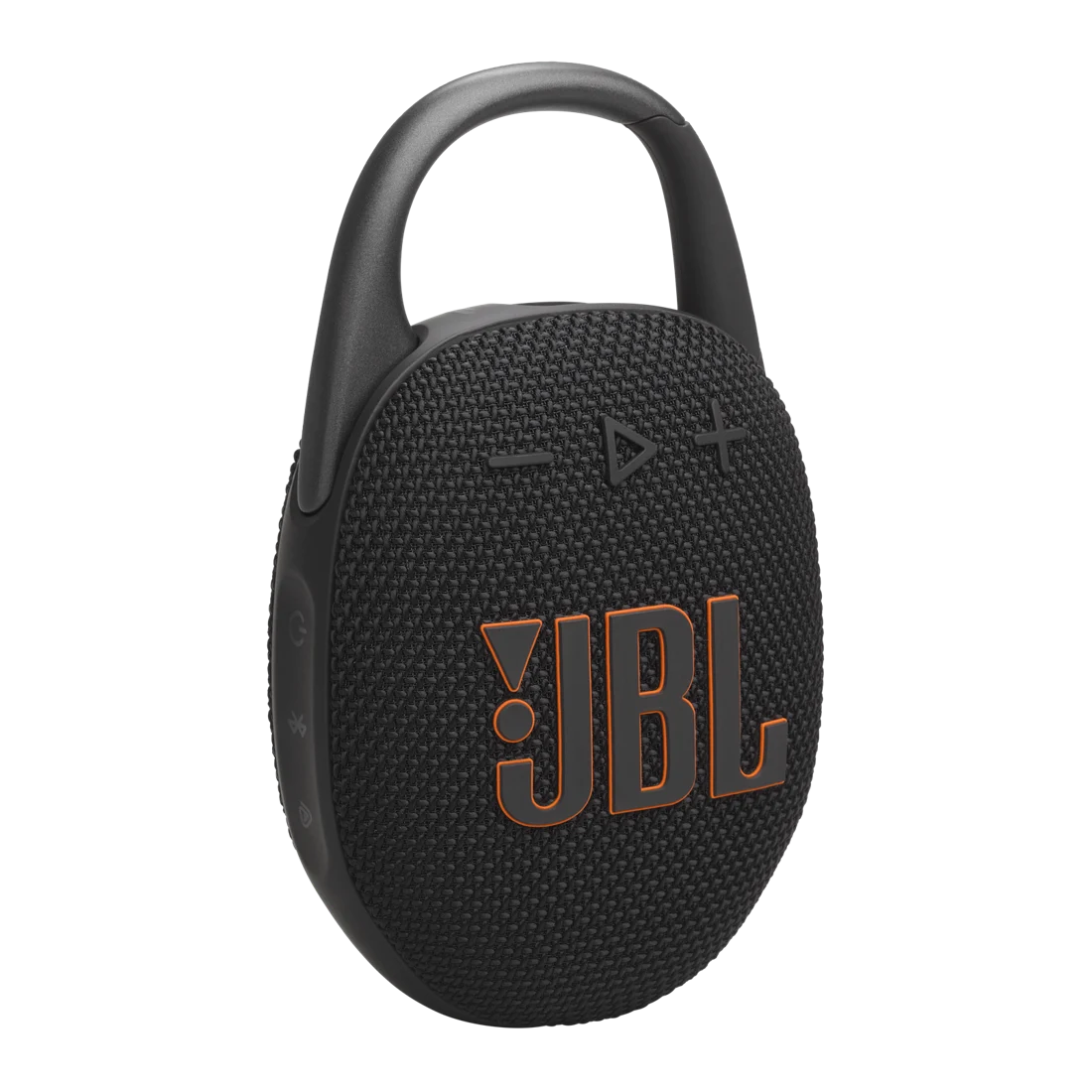 JBL Clip 5 |
|---|---|---|
| Weight | 190g | 285g |
| Playback claim | Up to 7h; up to 2h extra with Boost | Up to 12h; up to 3h extra with Boost |
| Attachment | Fabric carrying loop | Integrated carabiner |
Try the attachment point before choosing the clip
If the speaker will stay inside a pouch, the Go 4’s smaller loop and 190 g weight may be enough. If you want to attach it to a bag, check the Clip 5 carabiner against that strap or loop. Its 285 g weight adds 95 g, and the attachment hardware needs room too.
Keep ordinary playback and Playtime Boost claims separate: seven plus up to two hours for Go 4, twelve plus up to three for Clip 5. The longer combined numbers use a different mode. Choose the size and attachment that suit the trip, then leave room for a charging cable.
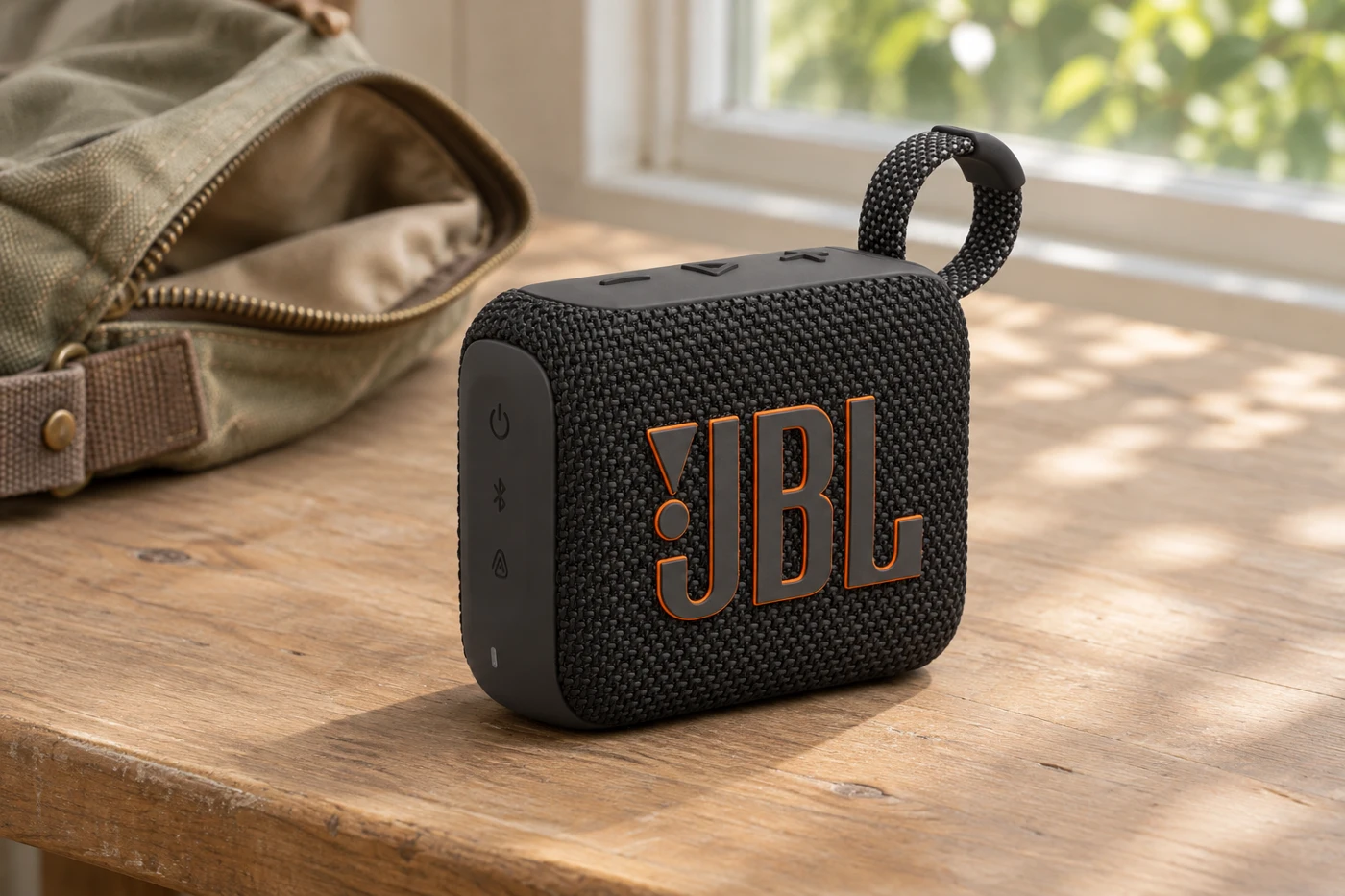
Where will the speaker sit?
Go 4 is the smaller carry in this comparison at 190g. Clip 5 weighs 285g, a difference of 95g. The Go has a fabric loop; the Clip has a carabiner built into its frame. If the speaker will spend most of its time on a table, the carabiner may be a feature you rarely use.
If it needs to attach to a strap or other suitable loop, the Clip’s built-in hardware is the more direct arrangement. Check the attachment point and clearance rather than assuming a carabiner fits every bag strap. Its frame is part of the object you must pack, not a removable accessory that disappears into the weight figure.
Keep normal playback and Boost separate
JBL lists up to seven hours for Go 4 and up to twelve hours for Clip 5. Playtime Boost is listed as adding up to two and three hours respectively. These are different operating conditions, so the clean comparison starts with seven versus twelve rather than silently presenting the boosted totals as normal playback.
Both use USB-C charging and both list about three hours to recharge; Go 4’s specification sheet states a 5V/1A charging condition. The USB-C socket should not be assumed to provide USB audio merely because it fits a computer cable. Charging and audio input are separate features.
The 4.2W and 7W figures in the product specifications refer to speaker output. Use the separate input specification when choosing a charger. The difference in rated speaker power is also too little information to judge sound quality.
Shared features do not decide the purchase
Both models list IP67 protection, Bluetooth 5.3 and Auracast multi-speaker support. For a single speaker used near a phone, those shared specifications do less to separate them than the carrying arrangement and battery claims. If pairing speakers is important, check the exact pairing combination and mode in the instructions.
Start with the Go 4 if low packed weight and a simple tabletop role are the main requirements. Look at Clip 5 if attachment and the longer published runtime solve a specific problem.
For shared spaces, the useful accessory may be headphones instead. A portable speaker is convenient only where playing aloud is welcome; that is a practical packing decision before it becomes a product comparison.
Sources
- JBL Go 4: manufacturer specificationsChecked November 15, 2026
- JBL Clip 5: manufacturer specificationsChecked November 15, 2026
- JBL Go 4 official specification sheetChecked November 15, 2026